


Specialist literacy support for children who experience challenges with reading, writing or spelling.
Individual assessment and evidence-based intervention for Kindergarten to Year 6 students, including children with dyslexia and other literacy learning needs.
How We Personalise Learning
Every learner follows an individual pathway to progress.
Instruction is carefully designed around each child’s strengths, challenges and learning needs.
-
Effective support begins with assessment. Our tools help build a comprehensive understanding of each child’s literacy profile, including:
Phonological and phonemic awareness
Phonic knowledge and decoding
Reading accuracy and fluency
Reading comprehension
Spelling and written language
Oral language skills
Vocabulary and language comprehension
Literacy development in relation to age and curriculum expectations.
This information provides a clear picture of each learner’s strengths and areas for growth.
-
Targeted assessment helps identify the factors that may be impacting reading, writing and spelling achievement. Areas requiring support may include:
Phonological processing
Decoding and word recognition
Spelling knowledge and word patterns
Written language skills
Reading comprehension
By identifying areas of need, intervention can focus on the skills most likely to accelerate progress and build confidence.
-
Assessment-informed teaching allows learning experiences to be carefully matched to each learner’s strengths and areas for growth.
All Pathway Literacy sessions are:
Grounded in evidence-based practice
Explicit and systematic
Cumulative and responsive to progress
Individualised to each student’s literacy profile.
Our goal is to teach the highest-impact skills at the right time, ensuring each learner receives targeted support that is purposeful and effective.
-
How do we know it’s working?
Student progress is reviewed regularly to ensure teaching remains effective and responsive.
Progress monitoring may include:
Ongoing formative assessment
Reading accuracy and fluency checks
Monitoring spelling and written language development
Reviewing achievement against individual goals
Adjusting teaching priorities as needed
Regular review helps ensure instruction remains targeted and that progress is clearly visible over time.
-
Partnership is central to effective literacy support.
Where appropriate, insights can be shared with your child’s teacher and support team to promote consistency across home, school and intervention settings.
Collaboration helps ensure everyone is working towards the same goals and supporting progress in a coordinated way.

Our Approach
-
Your initial parent consultation is complimentary, with no obligation to proceed.
We begin with a conversation about your child’s learning profile, current concerns, school history and goals.
This helps determine whether targeted assessment or intervention support may be appropriate.
-
Assessment identifies strengths, skill gaps and next steps. Families receive a comprehensive written literacy assessment report outlining learner strengths, areas requiring support and recommendations for targeted intervention and ongoing progress.
-
Instruction is tailored to the learner’s literacy profile, stage of development and identified learning needs.
Based on assessment findings, instruction may include:
Targeted weekly support
Accelerated intervention
Higher-frequency intensive instruction
Short-term intervention blocks
Instruction is explicit, structured and responsive to student progress.
Recommendations are informed by assessment data, progress monitoring and individual learning goals.
-
Progress is monitored regularly to ensure instruction remains responsive and effective.
Teaching is adjusted over time as students build skills, confidence and independence in reading, writing and spelling.
Regular communication with families helps support consistency between home, school and intervention.

Book a parent consultation
Complete the form below and we will contact you to discuss your child’s literacy profile, current concerns and recommended next steps.
By submitting this form, you agree to the Terms & Conditions and Privacy Policy.
Meet Emma

Emma is an experienced educator and literacy specialist with over 27 years of experience across Australia and the UK.
She supports children experiencing difficulties with reading, writing and spelling through structured assessment, targeted intervention and explicit instruction.
With extensive experience in early literacy, learning support and school leadership, Emma has held instructional leadership roles focused on curriculum, assessment and high-impact teaching practices. She has led Learning Support Teams within NSW school settings and worked closely with teachers, families and allied health professionals to support students with additional learning needs.
Emma has facilitated structured intervention programs, including MiniLit and MacqLit, and engages in ongoing professional learning aligned with current research and best practice in literacy instruction.
Her experience across classroom practice and educational leadership has provided a strong understanding of how literacy difficulties can affect learning, confidence and engagement at school.
Emma holds a Bachelor of Education (Early Childhood) from the University of Newcastle and has worked extensively across primary school settings throughout her career. She maintains a current NSW Working with Children Check and is a professional member of SPELD NSW.
Literacy Insights
-
As parents, we all want our children to feel confident and successful at school. Learning to read, write and spell takes time, and every child develops at their own pace. However, there are times when a child may need additional support to build the skills required for literacy success.
If you have concerns about your child’s progress, here are five signs that may indicate extra literacy support could be beneficial.
1. Reading Is Slow or Difficult
Learning to read is challenging, but over time most children become more fluent and confident. If reading continues to feel difficult, you might notice your child:
Reads slowly and hesitantly
Struggles to sound out unfamiliar words
Guesses words instead of reading them accurately
Loses their place when reading
Avoids reading aloud
Reading should gradually become more automatic. When every word requires significant effort, it can affect both confidence and comprehension.
At home: Read together regularly and make reading an enjoyable experience. Shared reading, audiobooks and discussing stories can all help build confidence and vocabulary.
2. Spelling Remains a Significant Challenge
Spelling develops over many years, but some children continue to struggle despite classroom instruction and practice.
Signs to look for include:
Difficulty remembering high-frequency words
The same word being spelt differently throughout a piece of writing
Challenges hearing and identifying sounds in words
Difficulty applying spelling patterns that have been taught
Strong spelling relies on a child’s understanding of the relationship between sounds and letters. When this foundation is not secure, spelling can remain a source of frustration.
At home: Encourage your child to write for real purposes, such as making lists, writing notes or creating stories about topics they enjoy.
3. Avoidance of Reading and Writing Tasks
Children who find literacy difficult often begin to avoid activities that feel challenging.
You may hear comments such as:
“Reading is boring.”
“I’m not good at writing.”
“Can you do it for me?”
Avoidance is often a sign that a child lacks confidence or feels overwhelmed by the task.
At home: Focus on effort rather than perfection. Celebrate small improvements and create opportunities for success.
4. Difficulty Retaining New Learning
Some children appear to learn new skills but struggle to retain or apply them over time.
You may notice that your child:
Needs repeated revision of the same concepts
Forgets words they have previously learnt
Finds it difficult to transfer skills into new situations
Requires more practice than expected to achieve mastery
Learning difficulties are not always about intelligence. Sometimes children simply need more explicit instruction, practice and opportunities to review previously taught skills.
At home: Short, regular practice sessions are often more effective than occasional longer sessions.
5. Literacy Difficulties Are Affecting School Performance
As children move through primary school, literacy becomes increasingly important across all learning areas.
You may notice:
Frustration with homework
Difficulty completing written tasks
Reluctance to participate in literacy activities
Concerns raised by teachers
A gap between effort and achievement
When literacy challenges are not addressed, they can affect confidence and participation across the curriculum.
At home: Continue to focus on your child’s strengths and interests. Confidence plays an important role in learning.
What Should You Do If You’re Concerned?
If several of these signs sound familiar, it may be worth seeking further support.
A good first step is to speak with your child’s classroom teacher. They can provide valuable information about your child’s progress and the strategies being used at school.
A comprehensive literacy assessment can also help identify:
Literacy strengths
Areas requiring further development
Specific reading, spelling and writing needs
Appropriate next steps for intervention and support
Questions you might ask include:
What are my child’s strengths as a learner?
Which literacy skills are proving most challenging?
What support is currently being provided at school?
How can I help at home?
Would further assessment be beneficial?
Early identification and support can make a significant difference. With the right instruction, children can develop the skills, confidence and resilience they need to become successful readers and writers.
If you are concerned about your child’s literacy development and would like further guidance, Pathway Literacy offers comprehensive literacy assessments and evidence-informed intervention tailored to each child’s individual needs.
-
What Is Structured Literacy?
If you have been researching reading difficulties, dyslexia or literacy intervention, you may have come across the term Structured Literacy. It is a phrase that is increasingly used by educators, speech pathologists and literacy specialists, but what does it actually mean?
Simply put, Structured Literacy is an evidence-informed approach to teaching reading, spelling and writing that is systematic, explicit and responsive to student needs.
Rather than expecting children to discover patterns in written language for themselves, Structured Literacy teaches these skills directly and in a carefully planned sequence.
Why Is Structured Literacy Important?
Learning to read is not a natural process for most children.
While children learn to speak through exposure to language, reading requires the brain to develop new connections between sounds, letters and meaning.
Many children learn these skills relatively easily. Others require more explicit instruction and practice.
Structured Literacy helps ensure that all children receive the instruction they need to develop strong literacy foundations.
What Does Structured Literacy Teach?
Structured Literacy focuses on the building blocks of reading and writing, including:
Phonological and Phonemic Awareness
Children learn to hear, identify and manipulate the sounds in spoken words.
For example:
Identifying the first sound in a word
Blending sounds together
Breaking words into individual sounds
These skills provide an important foundation for reading and spelling.
Phonics and Decoding
Children learn how letters and letter combinations represent sounds.
They are taught how to:
Match sounds to letters
Blend sounds to read words
Decode unfamiliar words
Recognise spelling patterns
This helps children become independent readers rather than relying on guessing.
Fluency
Children develop the ability to read accurately, smoothly and with increasing automaticity.
When word recognition becomes automatic, more attention can be devoted to understanding the text.
Vocabulary
Children learn the meanings of words and how vocabulary supports reading comprehension and written expression.
Reading Comprehension
Children are taught strategies that help them understand, interpret and think about what they read.
Spelling and Written Expression
Structured Literacy recognises the close connection between reading and spelling.
Children learn:
Sound-letter relationships
Spelling patterns
Morphology (meaningful word parts)
Sentence construction
Written expression
What Does Explicit Instruction Mean?
A key feature of Structured Literacy is explicit teaching.
Rather than expecting children to work out patterns independently, teachers clearly explain and model new learning.
Instruction typically follows a gradual release model:
I do (teacher modelling)
We do (guided practice)
You do (independent application)
Students receive regular feedback and opportunities to practise and review previously taught skills.
Who Benefits from Structured Literacy?
Structured Literacy benefits all learners but is particularly effective for students who:
Experience difficulties with reading or spelling
Have dyslexia
Require additional literacy support
Have gaps in foundational literacy skills
Need more explicit and systematic instruction
Because instruction is carefully sequenced and responsive to student needs, it can be adapted for learners at different stages of development.
How Is Structured Literacy Different from Traditional Approaches?
Structured Literacy places greater emphasis on:
Explicit teaching
Systematic skill development
Diagnostic assessment
Cumulative review
Practice and mastery
Rather than encouraging children to rely on pictures, context or guessing strategies, Structured Literacy helps students develop the skills needed to read words accurately and independently.
The Importance of Assessment
Every child follows a unique pathway to literacy development.
Assessment plays an important role in identifying:
Strengths
Areas of need
Skill gaps
Appropriate next steps for instruction
A clear understanding of a child’s literacy profile allows teaching to be targeted, purposeful and effective.
Supporting Literacy Success
Strong literacy skills open the door to learning across all areas of the curriculum.
Through assessment, explicit instruction and targeted intervention, Structured Literacy provides children with the knowledge and skills they need to become confident readers, writers and spellers.
Need Support?
Pathway Literacy provides evidence-informed literacy assessment and intervention for students from the early years through to upper primary. Through comprehensive assessment and personalised instruction, we help children build the skills, confidence and independence needed for long-term literacy success.
Contact Pathway Literacy to learn more or arrange a consultation.
-
Dyslexia is one of the most common learning difficulties, yet it is often misunderstood. Many children with dyslexia are bright, capable and creative learners who simply require a different approach to learning to read, spell and write.
Understanding dyslexia can help parents recognise early signs, access appropriate support and build confidence in their child’s learning journey.
What is Dyslexia?
Dyslexia is a specific learning difficulty that primarily affects reading and spelling development. It is neurological in origin and is not related to intelligence, motivation or effort.
Children with dyslexia often experience difficulties with phonological processing, which is the ability to recognise and manipulate the sounds in spoken words. These difficulties can make learning to read, spell and write more challenging.
Dyslexia exists on a continuum and presents differently from child to child. Every learner has a unique profile of strengths and areas requiring support.
Common Signs of Dyslexia
While signs vary, parents may notice that their child:
● Finds learning letter sounds difficult
● Has trouble blending sounds to read words
● Struggles to remember common sight words
● Reads slowly or inaccurately
● Has ongoing difficulties with spelling
● Avoids reading or writing tasks
● Finds it difficult to retrieve words or information quickly
● Becomes frustrated, anxious or lacks confidence when reading
These difficulties often persist despite quality classroom teaching and regular practice.
Recognising Strengths and Potential
While dyslexia can create challenges with reading and spelling, it is only one part of a child’s learning profile. Many students with dyslexia demonstrate strengths in areas such as:
● Strong verbal reasoning
● Creativity and imagination
● Problem solving skills
● Curiosity and innovation
● Big picture thinking
● Resilience and determination
A learning difficulty does not define a child’s potential.
With understanding, explicit teaching and appropriate support, children with dyslexia can achieve success in school and beyond.
Common Dyslexia Myths
Myth: Children with dyslexia see letters backwards.
Letter reversals can occur in many young learners and are not the defining feature of dyslexia. Dyslexia is primarily related to language processing rather than visual perception.
Myth: Dyslexia is caused by vision problems.
Current research indicates that dyslexia is a language-based learning difficulty rather than a visual disorder.
Myth: Coloured overlays or coloured glasses cure dyslexia.
Some individuals report that coloured overlays or tinted lenses make reading more comfortable. However, current research does not support coloured lenses or overlays as a treatment for dyslexia itself.
Children experiencing literacy difficulties benefit most from structured, evidence-based literacy instruction that directly targets reading and spelling development.
Myth: Children with dyslexia just need to try harder.
Dyslexia is not caused by laziness or lack of effort. Many children with dyslexia work exceptionally hard but require explicit and systematic instruction to develop literacy skills.
Does My Child Need a Diagnosis?
A formal diagnosis can provide valuable information and may assist with access to support and accommodations.
However, a diagnosis is not required before a child receives help.
Many children benefit from evidence-based literacy assessment and intervention regardless of whether a formal diagnosis has been made.
The most important step is identifying a child’s literacy strengths and areas of need and providing targeted instruction to support progress.
A Parent Perspective
As both an educator and a parent, I understand how emotional it can be when your child is struggling.
Like many families, I have experienced the worry of watching a child work harder than their peers while still finding reading and spelling difficult. I understand the questions parents ask themselves:
“Am I imagining this?”
“Will they catch up?”
“What should I do next?”
That personal experience has strengthened my passion for helping families navigate literacy difficulties with clarity, understanding and evidence-based support.
My goal is always to help parents understand their child’s learning profile and provide a pathway forward that builds both skills and confidence.
How Pathway Literacy Can Help
At Pathway Literacy, support begins with understanding the learner.
Assessment helps identify literacy strengths, areas of need and the skills most likely to have the greatest impact on progress. Intervention is then tailored to each student’s individual learning profile using structured, explicit and evidence-based approaches.
Services include:
● Literacy assessment and literacy profiling
● Individualised intervention
● Progress monitoring
● Home support recommendations
● Collaboration with families and schools
Further Information
For further information about dyslexia and learning difficulties, parents may find the resources available through SPELD NSW helpful.
Seeking support early can make a significant difference. With the right instruction, encouragement and understanding, children experiencing literacy difficulties can develop the skills and confidence they need to thrive.
-
If your child is finding reading, writing or spelling difficult, you may be wondering whether a literacy assessment is the next step. Many parents feel uncertain about what an assessment involves or worry that it might be stressful for their child.
The good news is that a literacy assessment is designed to be a positive and supportive experience. Rather than focusing on what a child cannot do, it helps identify their strengths, areas of need and the most effective pathway forward.
Why Have a Literacy Assessment?
Every child learns differently. While some children need a little extra practice, others benefit from targeted support that addresses specific gaps in their literacy development.
A comprehensive assessment helps answer important questions such as:
Why is my child finding reading or spelling difficult?
Which literacy skills are developing well?
Which areas need additional support?
What type of intervention is likely to be most effective?
By understanding your child’s individual learning profile, intervention can be carefully tailored to meet their needs.
What Skills Are Assessed?
A literacy assessment looks at the building blocks that contribute to successful reading and writing. Depending on your child’s age and needs, the assessment may include:
Phonological Awareness
Phonological awareness is the ability to hear and manipulate the sounds in spoken words. These skills form an important foundation for learning to read and spell.
Phonics and Word Reading
Your child may be asked to read letters, sounds and words to determine how confidently they can decode unfamiliar words using phonics knowledge.
Reading Accuracy and Fluency
Assessment looks at both how accurately your child reads and how smoothly and confidently they read connected text.
Reading Comprehension
Reading is about much more than saying the words correctly. Comprehension tasks explore how well your child understands and interprets what they have read.
Spelling
Spelling assessments help identify which spelling patterns, phonics skills and word structures your child has mastered and which areas require further teaching.
Writing
Writing samples provide valuable information about spelling, sentence construction, grammar, punctuation and written expression.
What Is the Assessment Like?
Assessments are completed individually in a calm, supportive environment.
Activities are interactive and varied, allowing children to demonstrate what they know without feeling like they are sitting a school test. Many children enjoy the one-to-one attention and find the experience encouraging.
Breaks are provided when needed, and the pace is adjusted to suit each child.
What Happens After the Assessment?
Following the assessment, the results are carefully analysed to build a clear picture of your child’s literacy strengths and areas for development.
Parents receive feedback that explains:
your child’s current literacy profile
key strengths to build upon
areas requiring further development
recommendations for targeted intervention
practical strategies to support learning at home and, where appropriate, at school.
Rather than simply identifying difficulties, the assessment provides a roadmap for supporting your child’s progress.
Why Early Assessment Matters
Children who struggle with literacy often work incredibly hard to keep up with their peers. Identifying difficulties early allows intervention to target the underlying skills before frustration and loss of confidence develop.
With explicit, evidence-based instruction, children can make meaningful progress and experience success as learners.
Supporting Every Child’s Learning Journey
Every child deserves the opportunity to become a confident reader and writer. A literacy assessment is not about placing labels on children. It is about understanding how they learn so that support can be personalised, purposeful and effective.
At Pathway Literacy, assessments are designed to identify each child’s unique strengths and learning needs, providing families with clear recommendations and a personalised pathway to literacy success.
Concerned about your child’s reading, writing or spelling?
If you would like to learn more about literacy assessment or discuss whether it may be appropriate for your child, get in touch to book an initial consultation.
-
If you’ve been researching literacy or speaking with your child’s teacher, you may have come across the terms phonological awareness and phonemic awareness. While they sound similar, they are not the same thing.
Understanding the difference can help parents better understand how children learn to read and why some children need additional support.
What is Phonological Awareness?
Phonological awareness is a broad term that refers to a child’s ability to recognise and manipulate the sounds of spoken language.
It is an oral language skill, meaning children do not need to look at letters or written words. Instead, they learn to listen carefully to the sounds they hear in speech.
Phonological awareness includes many different skills, such as:
• Recognising rhyming words
• Clapping the syllables in words
• Identifying words within a sentence
• Recognising beginning and ending sounds
• Blending sounds to make words
• Breaking words into individual sounds
These skills develop gradually as children become more aware of the sounds in spoken language.
What is Phonemic Awareness?
Phonemic awareness is a more specific skill. It is the ability to hear, identify and manipulate the individual sounds (phonemes) in spoken words.
It is the most advanced level of phonological awareness and plays a critical role in learning to read and spell.
Examples include:
• Identifying the first sound in sun.
• Blending the sounds /c/ /a/ /t/ to make cat.
• Breaking the word ship into the sounds /sh/ /i/ /p/.
• Changing the first sound in mat to /s/ to make sat.
These tasks require children to work with the smallest units of sound in spoken words.
So, What’s the Difference?
The easiest way to think about it is:
Phonological awareness is the umbrella.
Phonemic awareness is one part of that umbrella.
Phonological awareness includes all types of sound awareness, from recognising rhymes and syllables through to individual sounds.
Phonemic awareness focuses only on individual speech sounds, or phonemes.
Why Are These Skills So Important?
Before children can connect letters to sounds through phonics, they first need to hear and work with the sounds in spoken words.
Strong phonological and phonemic awareness skills help children:
• Learn phonics more easily
• Decode unfamiliar words
• Develop accurate spelling
• Read with greater confidence
Research consistently shows that phonemic awareness is one of the strongest predictors of future reading success.
Signs Your Child May Need Support
Some children may benefit from additional assessment if they:
• Find rhyming difficult
• Have trouble clapping syllables
• Struggle to blend sounds into words
• Cannot identify the first or last sound in a word
• Guess words rather than sounding them out
• Experience persistent reading or spelling difficulties
These challenges do not necessarily indicate dyslexia, but they do suggest that further assessment may be helpful.
Can These Skills Be Taught?
Yes.
Phonological and phonemic awareness develop through explicit teaching and regular practice.
Activities might include:
• Listening games
• Rhyming activities
• Syllable clapping
• Sound matching
• Blending spoken sounds
• Segmenting words into sounds
As children develop these skills, they become better prepared to learn phonics and develop strong reading and spelling skills.
How Pathway Literacy Can Help
At Pathway Literacy, assessment helps identify the specific literacy skills a child has developed and those that require further support.
By understanding whether difficulties stem from phonological awareness, phonemic awareness, phonics or another area of literacy, intervention can be carefully tailored to each child’s individual learning profile.
Early identification and evidence-based intervention provide children with the strong foundations they need to become confident, capable readers.
Every Child Can Build Strong Foundations
Learning to read begins long before children open a book.
By developing strong awareness of the sounds in spoken language, children build the foundation for phonics, reading, spelling and writing.
With the right support, every child can strengthen these skills and continue their pathway towards literacy success.
Family Resources
Free Decodable Reader Library
Free decodable texts for reading practice at home.
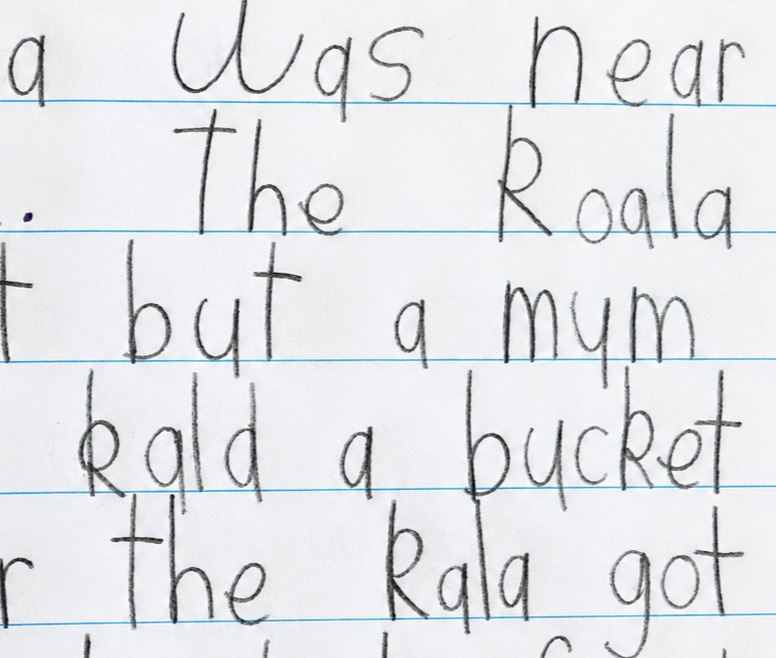
Auspeld
Understanding Learning Difficulties: A practical guide for families

Five from Five
Evidence-informed resources supporting effective reading instruction.
Supporting Families
In-person and online sessions available.
Our convenient Frenchs Forest location services Seaforth, Balgowlah, Brookvale, Manly, Dee Why, Killarney Heights, Forestville, Belrose, Mosman and the Northern Beaches.

Stay Connected
Find the right support for your child.